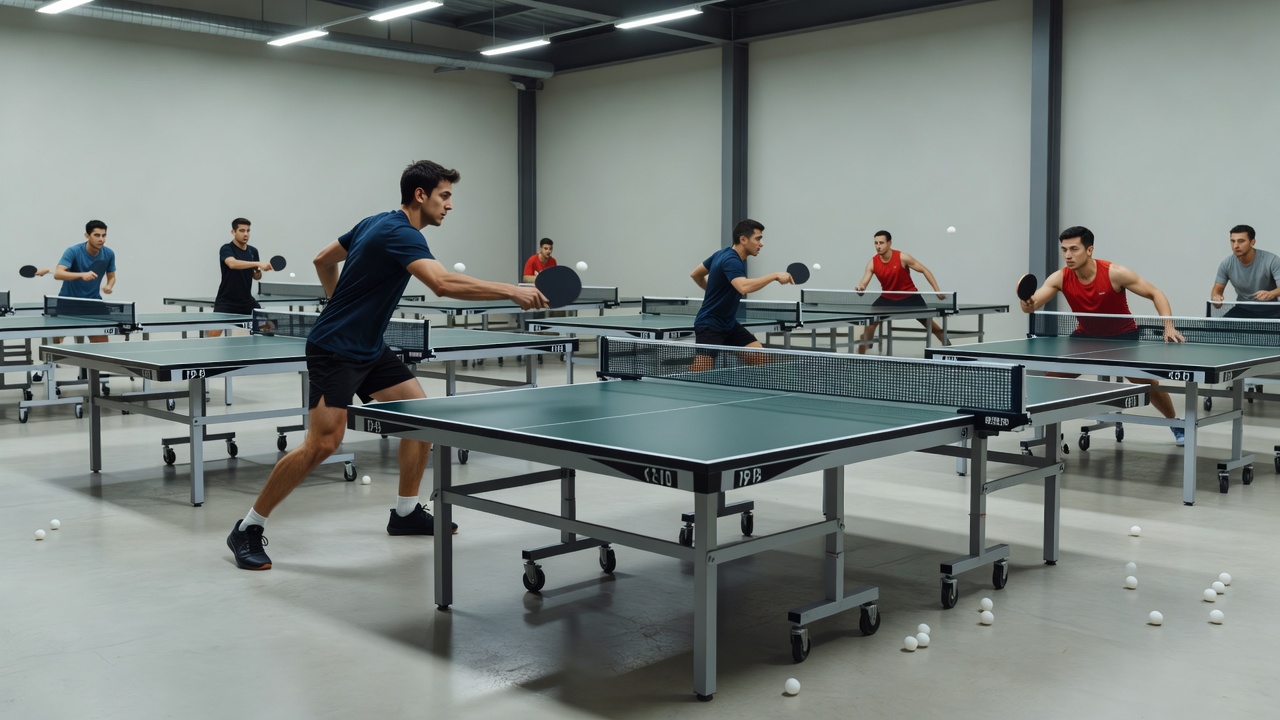
A room that lets practice continue
The most useful facility is not necessarily the newest or largest. It is the one that lets players complete suitable work with few avoidable interruptions. A centre can have excellent tables yet struggle with slippery approaches, confusing traffic routes or lighting that changes sharply from one end to the other.
Start your inspection during a normal training period. An empty hall tells you about potential; a working hall tells you how that potential is managed.
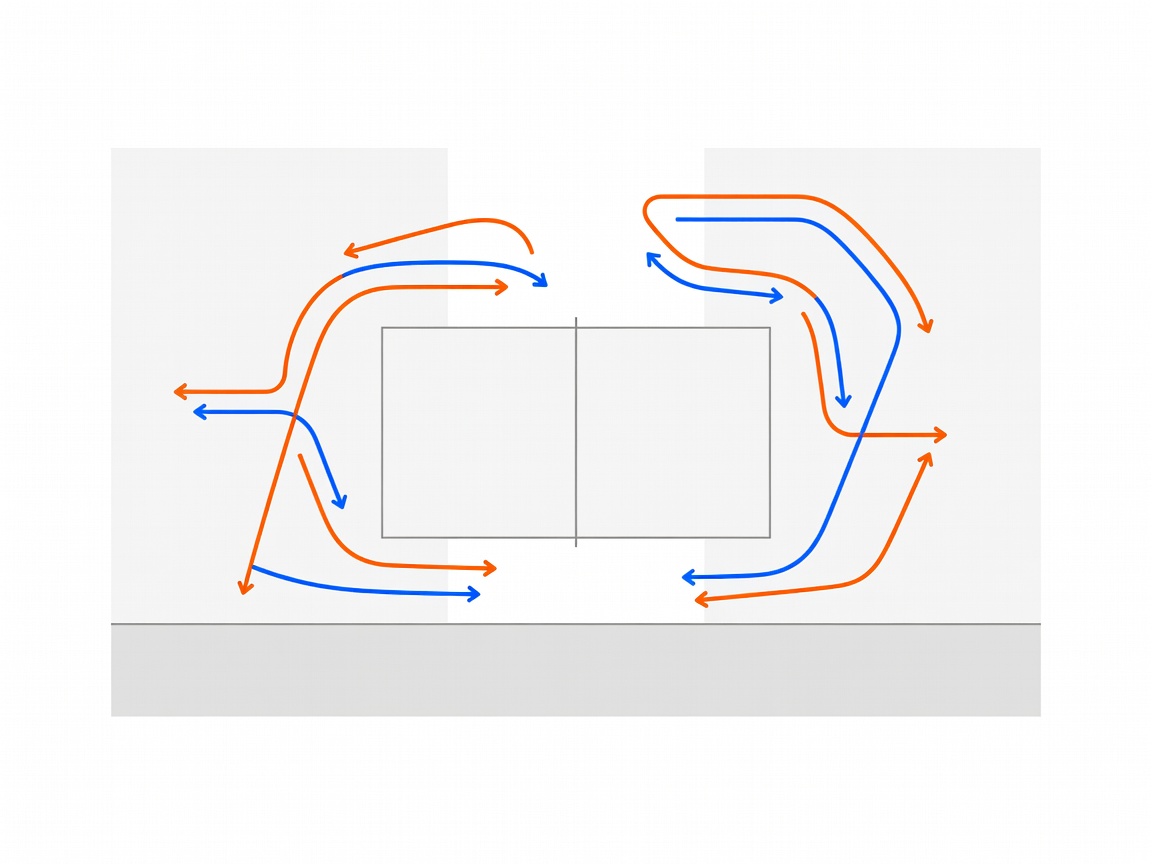
Inspect movement, not just table count
A player needs room to accelerate, recover and adapt to an unexpected ball. Watch the space behind the end line, beside the playing area and between neighbouring groups. A layout that works for controlled service practice may become unsuitable during wide-angle drills or defensive play away from the table. Ask whether table allocation changes with the session rather than treating every activity as interchangeable.
Barriers can organise a hall and limit loose balls, but they should not create awkward exits or conceal hazards. Look at bags, baskets, cables, ball collection and access to water. Players should know when to stop a rally because a ball has entered their area. The centre should have a clear incident-reporting process, not rely on experienced players to quietly solve every operational problem.
Separate rules from training needs
The International Table Tennis Federation, or ITTF, publishes the Laws of Table Tennis and regulations for international competition in its handbook. Competition requirements depend on the event and applicable regulations. They are not a universal certificate that every training session is well designed. Check the current official text when dimensions, equipment approval or event compliance matter; do not infer compliance from photographs or a centre’s use of the word “international”.
World Table Tennis and the European Table Tennis Union organise competitions in demanding environments, but a training base serves a different daily purpose. It may deliberately use flexible layouts for service practice, multiball or small-group work. Ask the coach to explain the trade-off. A sensible answer describes which activities fit safely, which require more room and when the layout is changed.
Grip, light and background
Inspect floor cleanliness and transitions at the edges of the playing area. Ask who checks the surface and how wet patches are handled. Notice glare, flicker and bright windows from both ends of a table. A ball that disappears against signage or a busy background creates an avoidable practice problem.
Air, noise and access
Check whether ventilation creates a noticeable draught across the ball’s flight. Listen to instruction during a busy session. Visit changing areas, toilets and access routes, and ask how reasonable adjustments are arranged. An accessible entrance alone does not establish that the whole training experience is accessible.
Equipment should match the task
Consistency matters more than collecting brands. Tables should be stable and maintained, nets checked, and practice balls selected for the intended task. Different ball batches or worn surfaces can complicate comparisons between sessions. Ask who maintains equipment, how damaged items are removed and whether players can prepare their own rackets without using an unsafe or poorly ventilated space.
| Item | Useful question | What to observe |
|---|---|---|
| Tables and nets | How are faults reported? | Stability, even setup and prompt maintenance |
| Practice balls | Are groups using a consistent supply? | Condition and suitability for the drill |
| Robots and multiball | What learning problem do they address? | Safe feeding, retrieval and transfer into live play |
| Video equipment | Where are cameras positioned? | Clear routes, consent and useful viewing angles |
Understand what a famous address cannot prove
Places such as Ochsenhausen, Düsseldorf and Saarbrücken are well known in European table tennis. Their names can provide useful context when researching the sport, but a city’s reputation says little about your access to a particular coach, suitable partners or a specific session. Similarly, a relationship claimed with Table Tennis England, the German Table Tennis Association or the French Table Tennis Federation should be checked directly when it affects eligibility or provision.
Finish by asking how the hall operates at your actual training time. Will school groups share it? Are tables regularly displaced by events? Is the advertised space available to everyone or reserved for a squad? Request the normal timetable and cancellation policy in writing. A transparent explanation of constraints is more valuable than an impressive tour that avoids them.