Begin with one answerable question
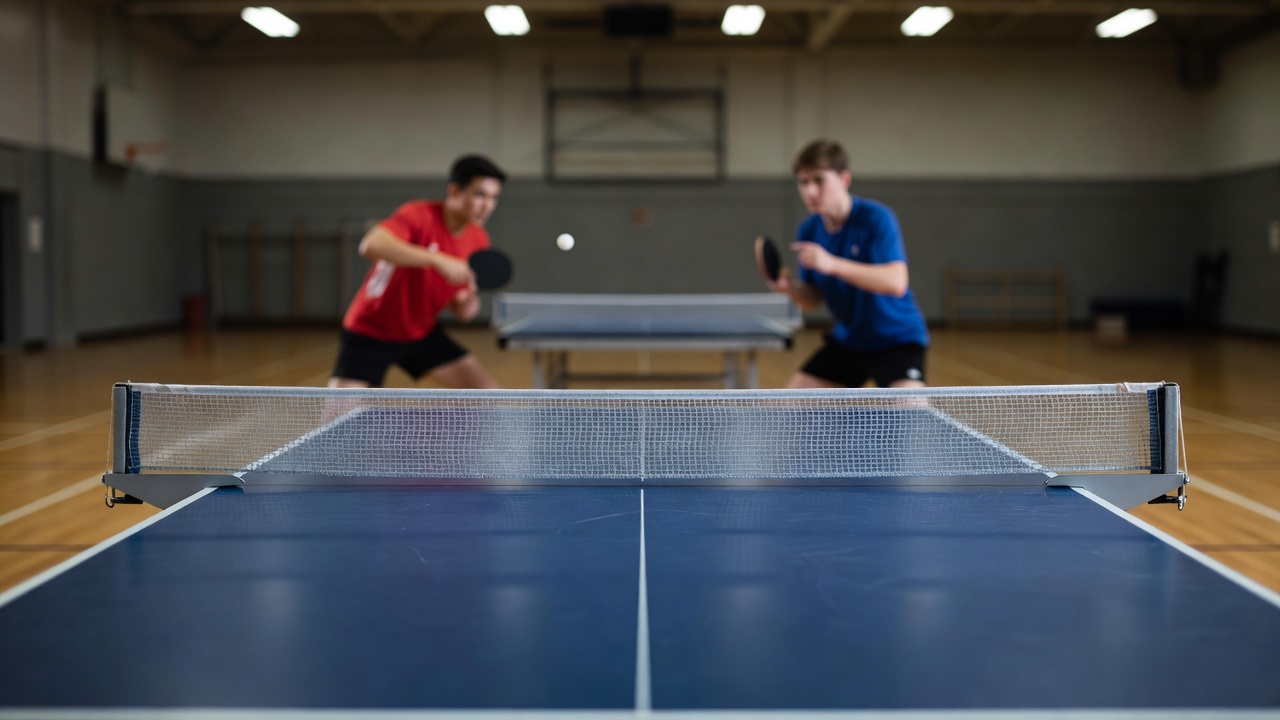
“Improve the backhand” is too broad for a useful first review. “What happens to our receiving position after this short serve?” gives the observer something specific to examine. A clear question keeps the review connected to training rather than turning it into a collection of interesting clips.
Ask a centre to show its process, using material it has permission to share. You need to see the connection between evidence and action, not another player’s private records.
Separate observation from explanation
An observation describes what can be seen: the player contacts the ball while still moving, or several receives finish longer than intended. An interpretation suggests why. The receiver may have misread the serve, started late or chosen an unsuitable touch. These explanations are not interchangeable, and one camera view may not distinguish them. Good analysts state uncertainty instead of treating an attractive explanation as established fact.
Use more than the final ball of a rally. An error on the fifth ball may begin with an uncertain receive or a poor recovery after the opening attack. Watch the sequence before assigning a technical correction. Invite the player to explain what they perceived. Their account does not replace observation, but it can reveal an intention that the footage alone cannot show.
Capture enough, without disrupting practice
A stable, unobstructed angle that shows the player and relevant space is often more helpful than elaborate equipment. Side views and rear views answer different questions. Camera position, frame rate, motion blur and perspective can limit what is visible, especially for contact and spin. Do not infer precise biomechanics or ball rotation from footage that cannot support the claim.
Tripods, power leads and viewing screens must not create hazards in run-off areas. Agree when filming happens and who can appear in the frame. Children and visiting opponents require particular care. Ask about permission, access, storage, retention and deletion before recordings become routine. A centre should distinguish private coaching review from publicity or social media use, rather than treating permission for one as permission for everything.
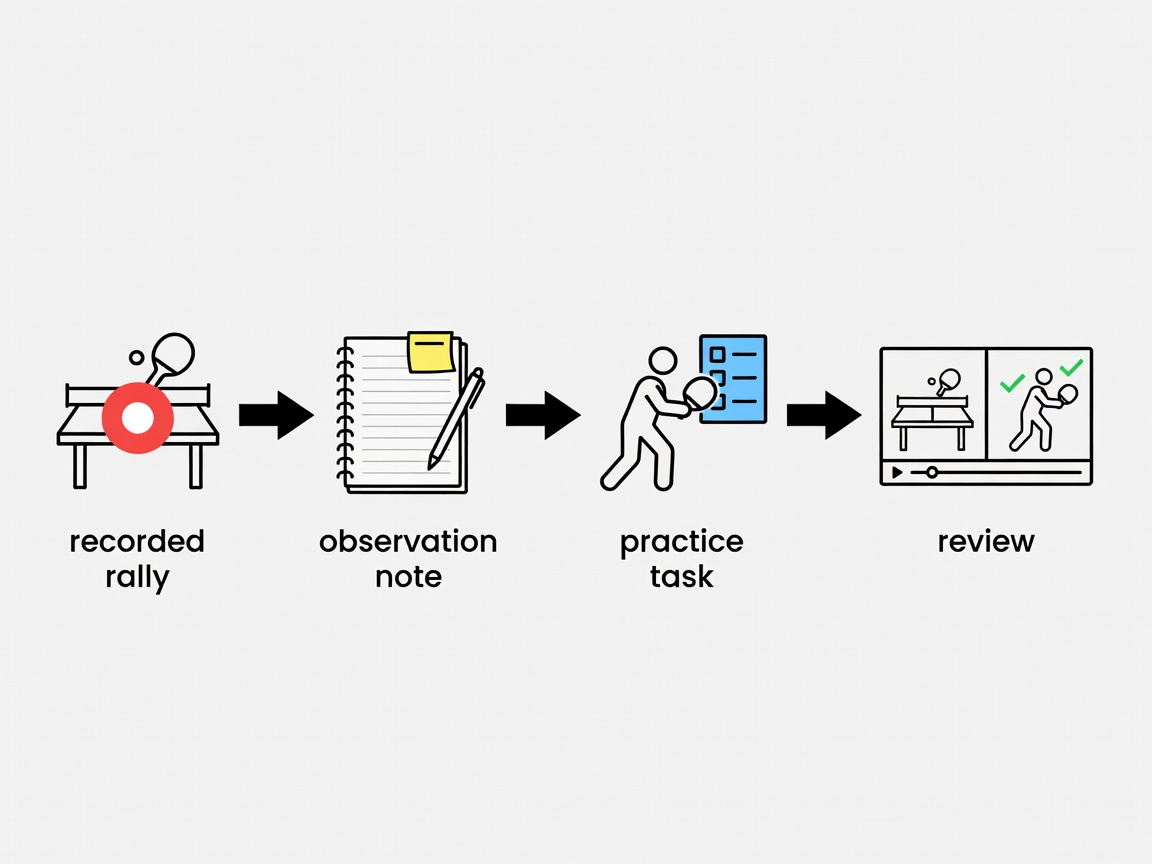
An illustrative review loop
Question: does the player recover a useful ready position after the opening forehand?
Observe selected rallies, note the context, then design a task that includes the next ball. Retest in live points. Keep the cue only if it helps the player perform the intended action.
What a count cannot tell you alone
A tally of missed openings does not explain ball quality, opponent pressure, match situation or the risk the player deliberately accepted.
Record the definition of a category before counting it. Otherwise two reviewers may produce different totals while believing they measured the same thing.
Use modest measures carefully
Simple records can clarify a pattern: serve type, receive choice, first attacking opportunity or rally outcome. Choose a small set that answers the agreed question. Define ambiguous cases and keep the observation period comparable. A short sample is a starting point for discussion, not a stable verdict on ability. Avoid presenting changes from a few practice games as evidence of guaranteed competition improvement.
Match footage from World Table Tennis events, the Olympic Games or European Table Tennis Union competitions can help players study tactical possibilities. It cannot establish that the same solution suits their current physical capacity or skill. Observe what elite players do, then work with a coach to select a manageable learning task. The ITTF’s rules provide context for legal service and play; a highlight clip is not a substitute for the current rules or an official decision.
Make feedback usable on the next table
A review should finish with a practical agreement: one focus, a suitable task and a point at which the result will be reconsidered. The player should be able to describe the focus in ordinary language. A long list of corrections may feel thorough while making action harder. Ask how the coach decides which issue matters now and which can wait.
Analysis also needs a place in the timetable. If footage is reviewed only after disappointment, players may experience the process as criticism rather than learning. Short, predictable reviews can include successful decisions as well as problems. Let the player identify a clip, explain their reasoning and suggest a task. That participation helps keep responsibility shared without asking the athlete to become their own full-time analyst.
Evaluate the system, not the screen
Before paying for an analysis package, establish who records, who reviews, how often feedback arrives and whether the lead coach uses it. Ask whether export or deletion is possible when the player leaves. A sophisticated dashboard with no coaching follow-through can be less useful than a careful notebook and a few well-chosen clips. The best question remains simple: what did the evidence change in this week’s practice?